What does it actually cost to open a coffee shop?
Opening a coffee shop is one of the most popular small business ideas — and one of the most frequently underestimated in terms of upfront cost. Many first-time café owners focus on finding the perfect location and curating a great menu, without ever sitting down to build a realistic startup budget.
The result? They run out of money before they hit their stride.
The total cost to open a coffee shop typically ranges from $80,000 to $300,000+, depending on your city, the size of the space, and whether you're building out a raw unit or taking over an existing café setup. Here's a full breakdown of where that money goes.
| Cost Category | Low Estimate | High Estimate | Notes |
|---|---|---|---|
| Lease & Buildout | $30,000 | $100,000+ | Deposits + renovation |
| Equipment | $20,000 | $60,000 | Espresso machines, grinders, fridges |
| Furniture & Fixtures | $5,000 | $25,000 | Seating, lighting, signage |
| Permits & Licenses | $1,000 | $5,000 | Varies by city/state |
| Initial Inventory | $5,000 | $15,000 | Beans, milk, cups, packaging |
| Staffing & Training | $5,000 | $20,000 | Pre-opening payroll + training |
| Working Capital Reserve | $15,000 | $50,000+ | 3–6 months of operating costs |
| Total Estimated Startup Cost | $81,000 | $275,000+ |
Let's dig into each category so you know exactly what to plan for.
1. Lease, Deposits & Buildout
Your physical space is almost certainly your largest upfront cost. Before you can open, you'll typically need to pay first and last month's rent, a security deposit (often 1–3 months of rent), and buildout costs if the space needs work.
Buildout costs vary enormously. If you're taking over a former café with plumbing and electrical already in place, you might spend $15,000–$30,000 on cosmetic upgrades. If you're converting a raw retail unit, costs can climb to $80,000–$150,000 to cover construction, commercial plumbing, ventilation, and a custom service counter.
Always negotiate a tenant improvement allowance (TIA) with your landlord — many will contribute toward buildout costs in exchange for a longer lease commitment. This alone can save you tens of thousands of dollars.
2. Equipment
Coffee shop equipment is a major capital investment. Here's what most cafés need to budget for:
Espresso & Brewing Equipment
A quality commercial espresso machine is the heart of your café. Entry-level commercial machines start around $5,000. Premium two-group machines from brands like La Marzocco or Synesso can cost $15,000–$22,000. Add a commercial grinder ($1,500–$4,000), a batch brewer ($500–$2,000), and any cold brew or pour-over equipment your menu requires.
Refrigeration & Storage
You'll need an under-counter milk fridge, a reach-in commercial refrigerator, and possibly a chest freezer for ice cream or frozen drinks. Budget $3,000–$8,000 for refrigeration alone — more if you're serving food that requires additional cold storage.
POS System & Technology
A modern POS system (Square, Toast, or Lightspeed) typically costs $1,000–$3,000 upfront plus a monthly subscription. Don't forget a receipt printer, cash drawer, and a customer-facing display. If you're planning for online ordering or loyalty programs, factor in the setup costs for those integrations.
3. Furniture & Fixtures
The ambiance of your café directly impacts dwell time and repeat visits. A well-designed space doesn't have to be expensive, but it does need to be intentional. Budget for tables and chairs, bar or counter seating, lighting fixtures, shelving and display cases, and exterior signage.
A modest but thoughtfully designed interior can be achieved for $8,000–$15,000. Custom millwork, premium furniture, or a distinctive design concept can push this to $25,000 or more. Exterior signage alone — including fabrication and installation — typically runs $1,500–$6,000 depending on materials and complexity.
4. Permits & Licenses
Before you can serve a single cup, you'll need several permits and licenses. Requirements vary by state and city, but most coffee shops need the following:
- Business license from your city or county
- Food handler's permit or food service establishment license
- Health department inspection and food safety permit
- Certificate of Occupancy (CO) confirming the space is approved for your use
- Seller's permit for sales tax collection
- Music license if you play copyrighted music (ASCAP and BMI are the two main US licensing bodies)
Budget $1,000–$5,000 for permits and plan extra time — some permits take weeks or even months to process, which can directly delay your opening date. Contact your local city hall or Small Business Administration office early in the process to understand exactly what you need.
5. Initial Inventory & Supplies
You'll need a complete stock of consumables and supplies before opening day. This includes coffee beans, syrups, dairy and non-dairy milks, pastries or food items if applicable, cups, lids, sleeves, napkins, straws, and cleaning supplies. A typical initial inventory order runs $5,000–$10,000, and you should budget for the first several weeks of restocking before your revenue stabilizes.
Establish wholesale accounts with a local coffee roaster and a foodservice distributor as early as possible. Many roasters offer better pricing, flexible delivery, and even barista training support once you're set up as a business account — which can help offset your costs in the early months.
6. Staffing & Training
Hiring and training staff before your doors open is an often-overlooked line item in startup budgets. Most cafés run 1–2 weeks of paid training shifts plus soft-opening days where the café operates for a limited audience to test workflows and iron out any service issues.
Depending on your team size, pre-opening payroll alone could run $3,000–$8,000. Factor in the cost of food safety certification for your team (required in most states), any uniforms or branded aprons you provide, and the time you'll spend as an owner in training rather than other activities. If you're hiring an experienced head barista or manager, you may also pay a premium on their salary during the ramp-up period.
7. Working Capital & Cash Reserve
This is the line item that catches the most new café owners off guard — and it's the one most likely to determine whether your business survives its first year.
Even if your opening goes well, most coffee shops take 6–18 months to reach consistent profitability. During that ramp-up period, you still owe rent, payroll, utilities, and supplier invoices every single month. If you've spent every dollar on buildout and equipment, you have no buffer for slow weeks, unexpected repairs, or the natural volatility of a new business finding its footing.
A solid rule of thumb is to have 3–6 months of total operating expenses in reserve before you open. If your monthly costs (rent, payroll, supplies, utilities) total $15,000, you should have $45,000–$90,000 available as a cash buffer in addition to your buildout and equipment spend.
Why You Need a Financial Model Before You Open
Estimating startup costs is only half the picture. The other half is understanding your ongoing economics: how many cups you need to sell per day to break even, what your cash flow looks like month by month, and what happens to your runway if foot traffic is slower than expected in the first few months.
A coffee shop financial model lets you answer all of these questions before you commit a single dollar. With the right template, you can:
- Input your specific rent, equipment, and staffing costs
- Set revenue assumptions based on expected daily customer count and average ticket size
- See your monthly break-even point clearly
- Run scenarios — what if I'm at 60% of expected volume for the first three months?
- Generate a 5-year P&L, cash flow statement, and balance sheet for lenders or investors
- Know exactly how much capital you need to raise before approaching a bank or investor
Here is how the dashboard in our Coffee Shop financial model template looks, with all the vital indicators in one place.

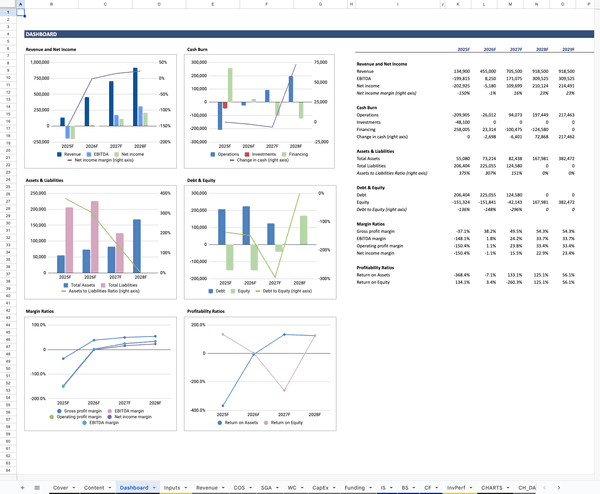
Rather than building this infrastructure from scratch in a blank spreadsheet, a purpose-built financial model template gives you the structure, formulas, and financial statements already in place. You spend your time on strategy and assumptions — not on debugging circular references.
Coffee Shop Financial Model Template
Plug in your numbers and instantly see your break-even point, cash runway, and 5-year profit forecast. Built for café owners, not accountants. Available in Excel and Google Sheets.